Keep carry and total distance in different columns
Keep the measuring system's carry definition, total distance and conversion settings separate when reading a fitting report.
Updated:

Two distance columns answer different questions
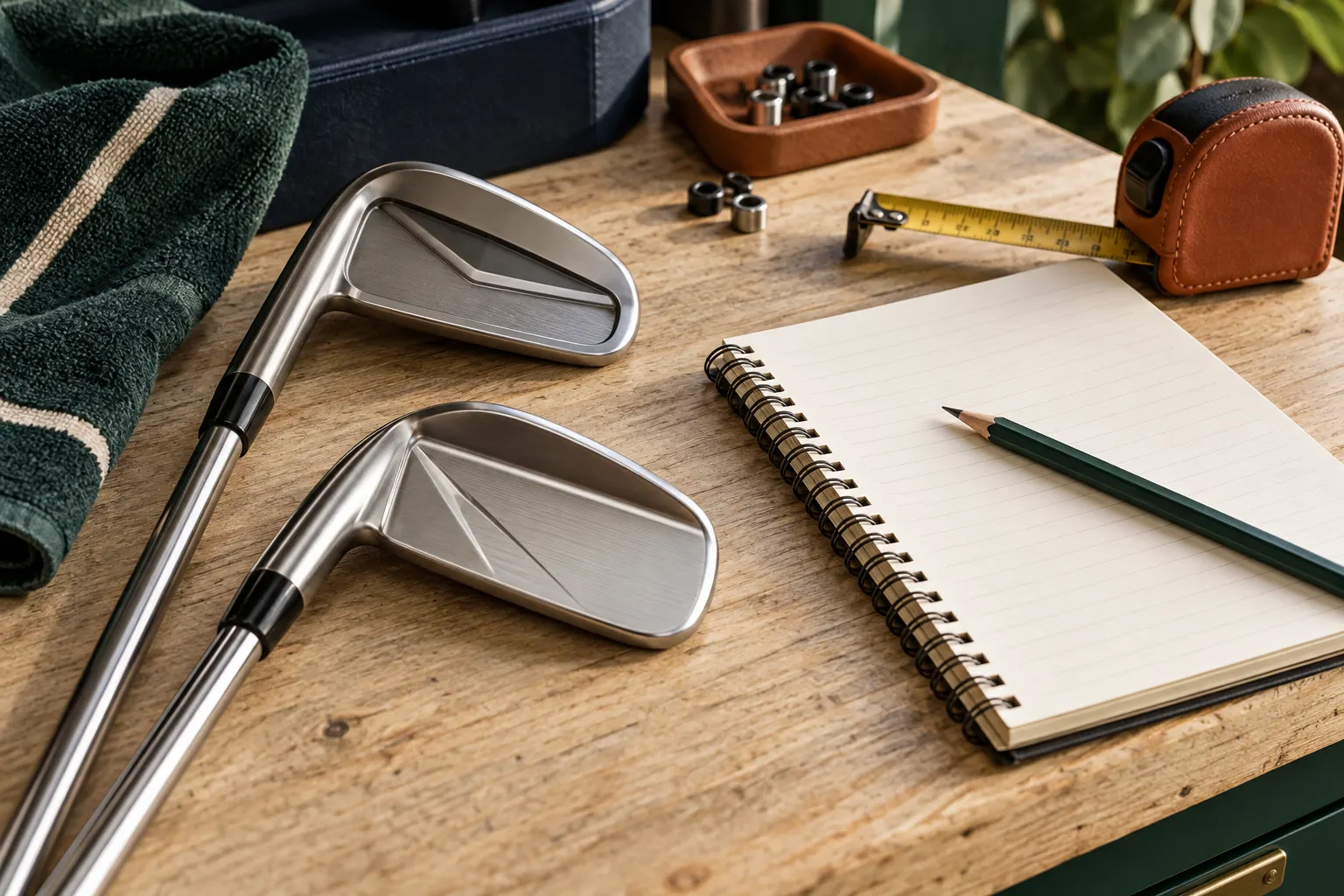
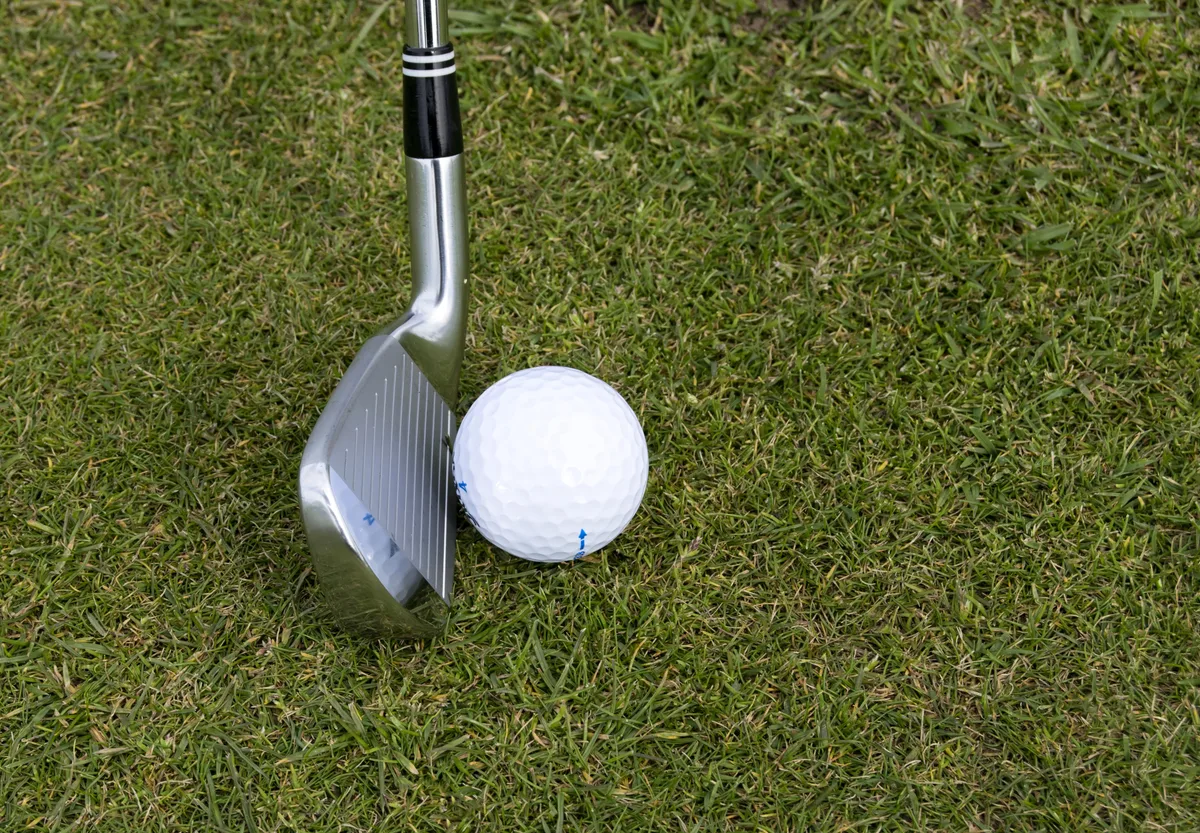
Carry and total distance should stay in separate columns because they describe different outputs. Trackman's technical definition of carry uses the trajectory point at the same height as impact, rather than simply assuming the ball's first contact with sloping ground. Keep the definition used by the actual system with the report. A total-distance field may include a modelled ground contribution, so its meaning also needs the system's explanation. The iron-and-ball photograph identifies the physical club and ball; it does not show a measured trajectory, actual landing position or a total-distance result.
Trackman carry definition ? Trackman Range actual and flat carry ?
Preserve the mode as well as the unit
Trackman Range distinguishes Actual Carry and Flat Carry in the context of ball conversion. Its conversion process uses measured launch conditions to model how a premium ball would perform. A converted reading is therefore not interchangeable with an unconverted observation merely because both are displayed in metres. Record the mode, ball type and relevant settings beside the numbers. If a fitting report combines data from different sources, establish which rows were measured, converted or otherwise modelled before comparing averages. A familiar device screen cannot fill in those missing definitions after the session has ended.
Work through a labelled fictional pair
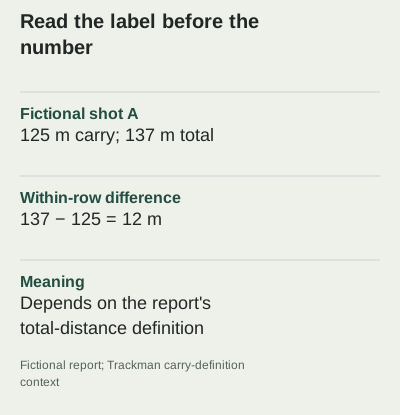
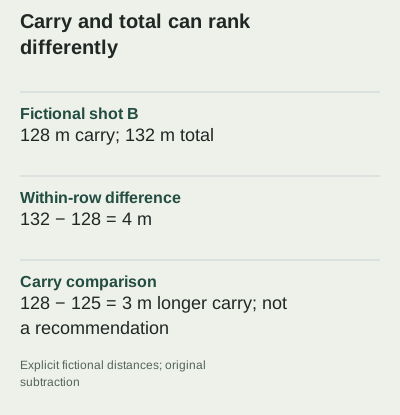
Imagine a fictional report showing 125 m carry and 137 m total for one shot in a stated mode. The arithmetic difference is 137 − 125 = 12 m. That difference belongs to this example's total-distance definition; it is not a promise of 12 m of real roll on every green or fairway. If another row has 128 m carry and 132 m total, the differences are 4 m, while carry itself is 3 m longer. Ranking only the larger total would hide that distinction. These invented readings illustrate column interpretation, not a club recommendation or a test of any product.
Keep the rangefinder record in its own place
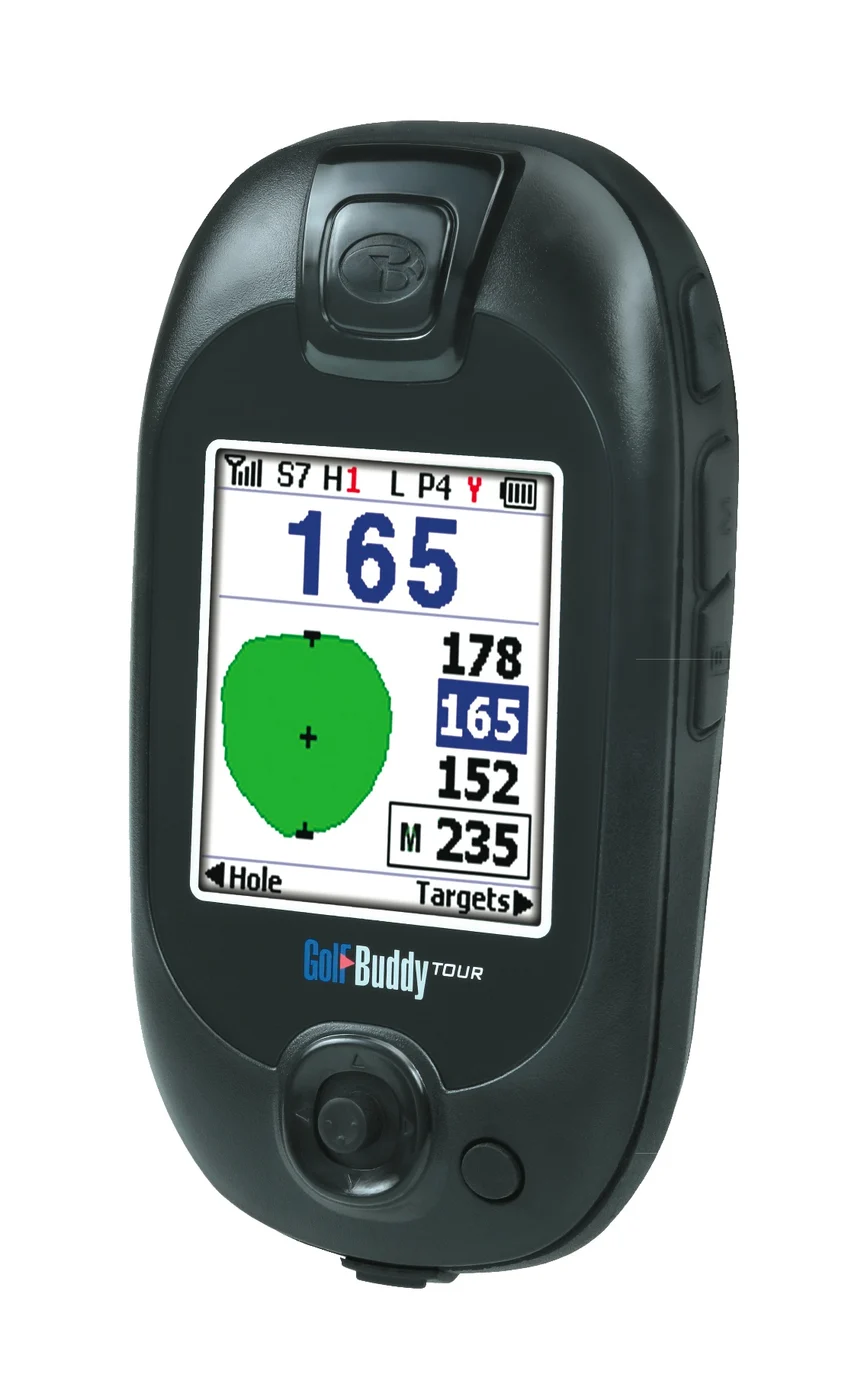
The archived GolfBuddy photograph shows a handheld distance-reading device, not a launch monitor measuring a shot. Its screen can illustrate why displayed units and target labels matter, but it does not supply the carry or total definition for a fitting report. Keep a target-distance observation separate from the measured or modelled flight data for a club. Likewise, the older wedge photograph identifies different equipment; a loft marking cannot tell you the actual carry produced by your swing. Connecting these records requires their own evidence rather than treating every number called distance as the same measurement.
Choose a comparison that matches the purchase question
If the equipment question concerns a carry interval, compare carry records in the same mode and conditions. Preserve total-distance information when it is useful, but give it its own label and assumptions. Keep the raw rows available so a summary can be checked later without guessing how the display was configured. A report with an unexplained mode change remains incomplete for a like-for-like comparison. The useful result of this reading exercise is a clear statement of what each column means and what differs between sessions, with no claim that a nominally longer number guarantees better on-course decisions.
Open official model documentation ? Open official model documentation ?