Budget for practice sessions without inventing improvement
Build an Australian-dollar practice budget from explicit session, travel and equipment assumptions without promising improvement.
Updated:
Budget for the routine you can actually describe
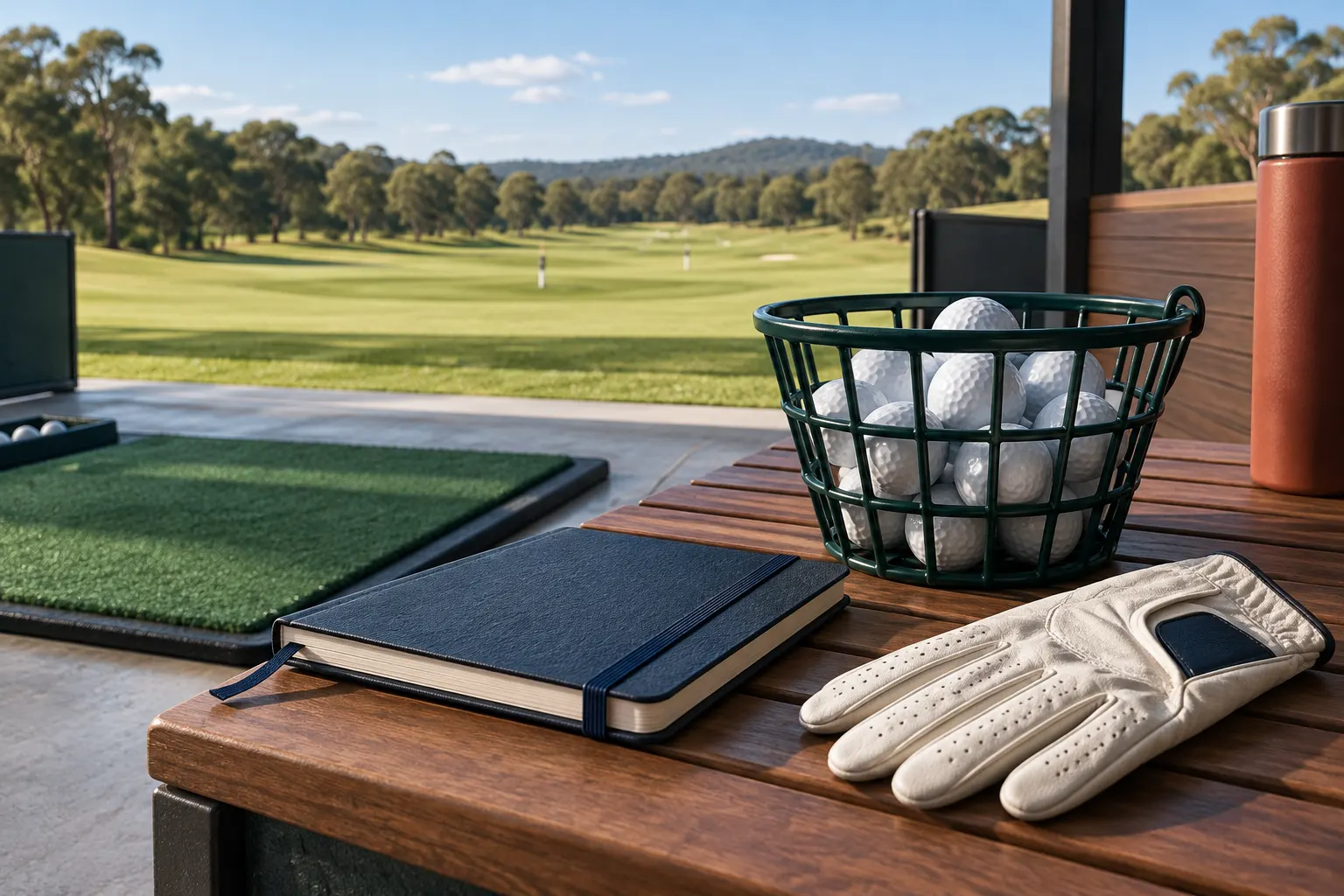
A practice budget should state how often you expect to attend, what each visit includes and which costs sit outside the entry price. It is a spending plan, not evidence that a particular number of sessions produces a handicap improvement. Start with the actual venue offer when available, keeping its date and conditions. ACCC price-display guidance provides Australian context for reading complete consumer prices. The glove and ball photograph shows ordinary equipment that can belong to a practice inventory; it does not demonstrate a coaching programme, a current venue package or an equipment purchase that everyone needs.
Complete one explicitly fictional monthly example
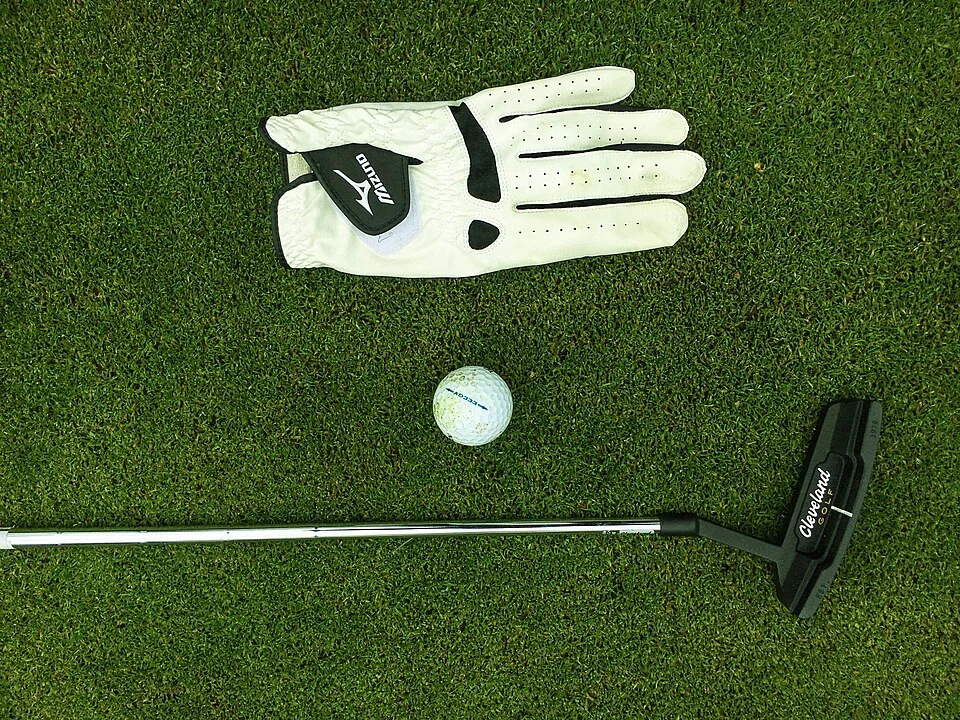
Suppose a fictional plan has 4 visits at AUD 18 each, with AUD 6 travel cost per visit and AUD 12 for an identified replacement item during the month. Entry totals 4 × 18 = AUD 72, travel totals 4 × 6 = AUD 24, and the complete illustrative amount is 72 + 24 + 12 = AUD 108. These are invented budget inputs, not current Australian range prices, transport fares or a recommended practice frequency. Keep optional purchases separate so they do not quietly become mandatory costs in the comparison.
Compare a different schedule at the same scope
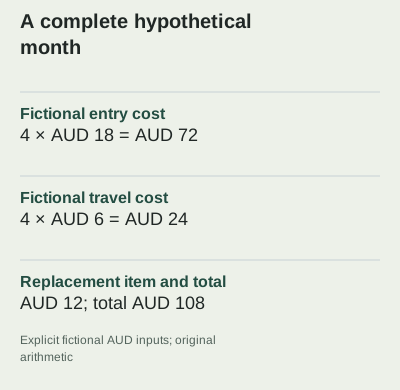
If a second fictional plan uses 3 visits with the same assumed visit and travel amounts and the same AUD 12 replacement item, the arithmetic becomes 54 + 18 + 12 = AUD 84. The AUD 24 difference comes from one fewer assumed visit and its travel cost, not a claim that either plan provides better learning or value. A membership or package needs its actual inclusions and expiry terms before the totals can be compared fairly. Do not treat unused visits, an omitted booking charge or a different ball allocation as if they were equivalent experiences.
Keep equipment and time assumptions visible
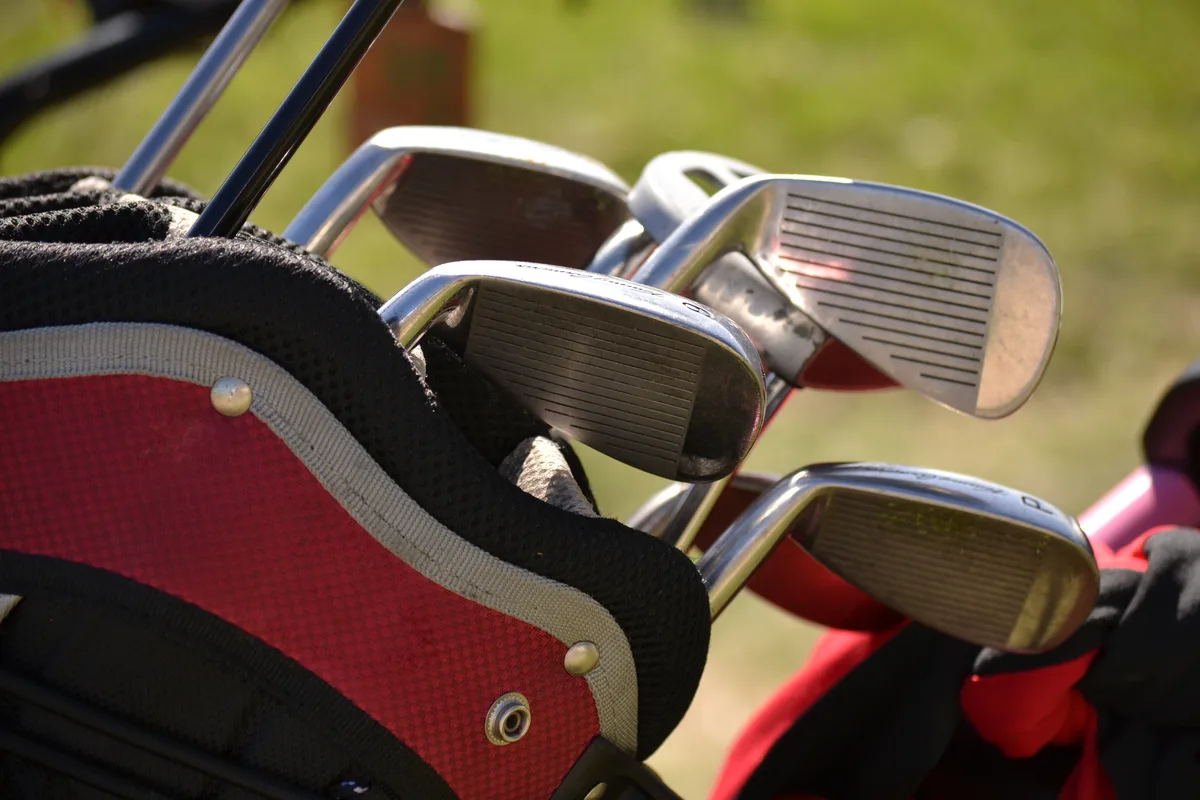
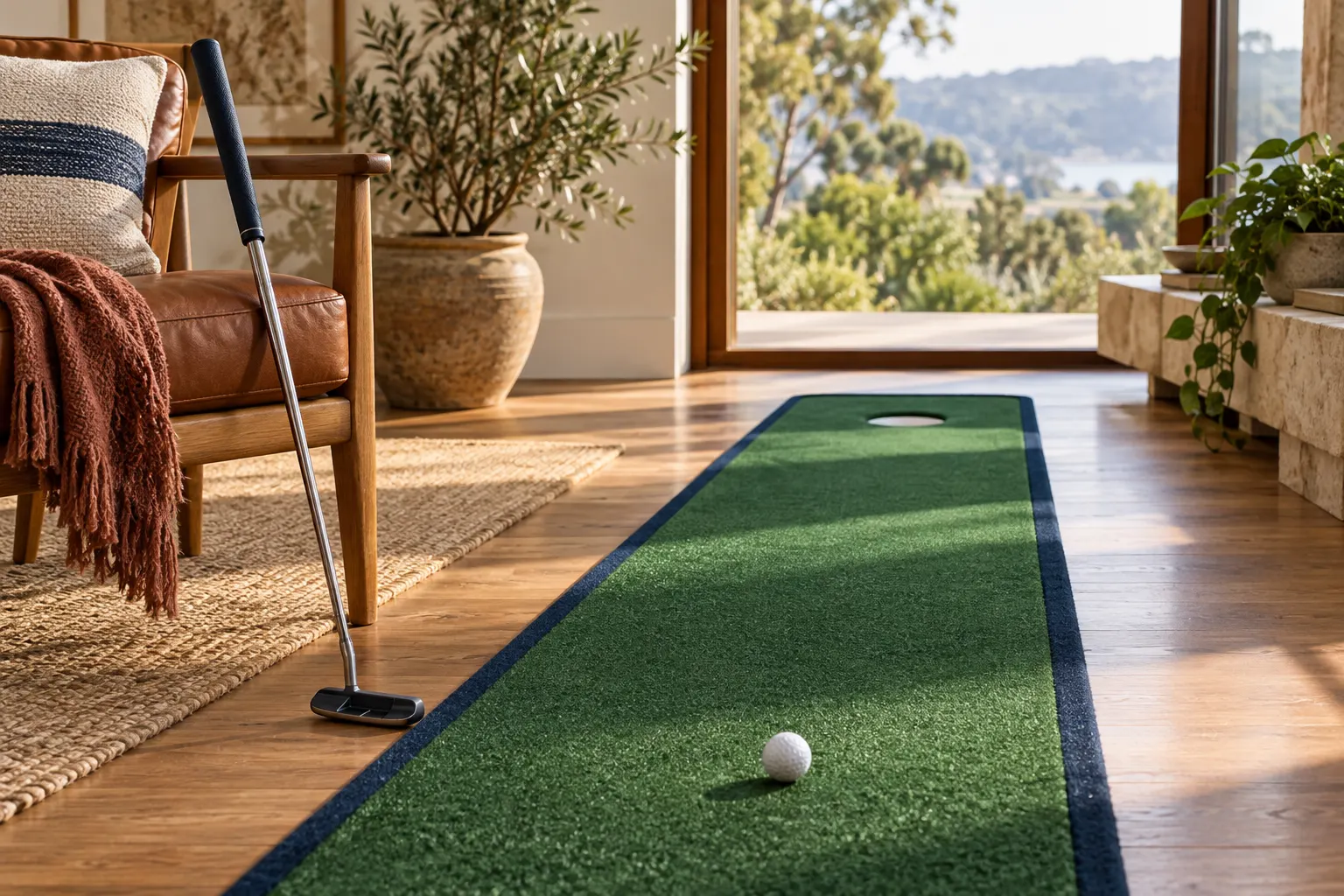
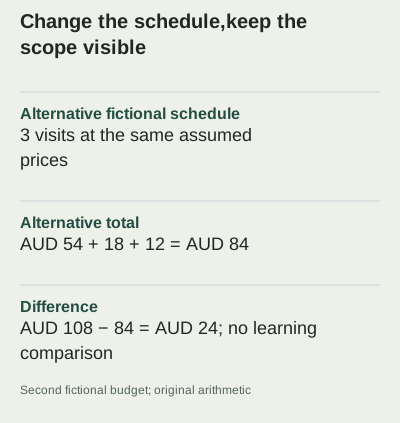
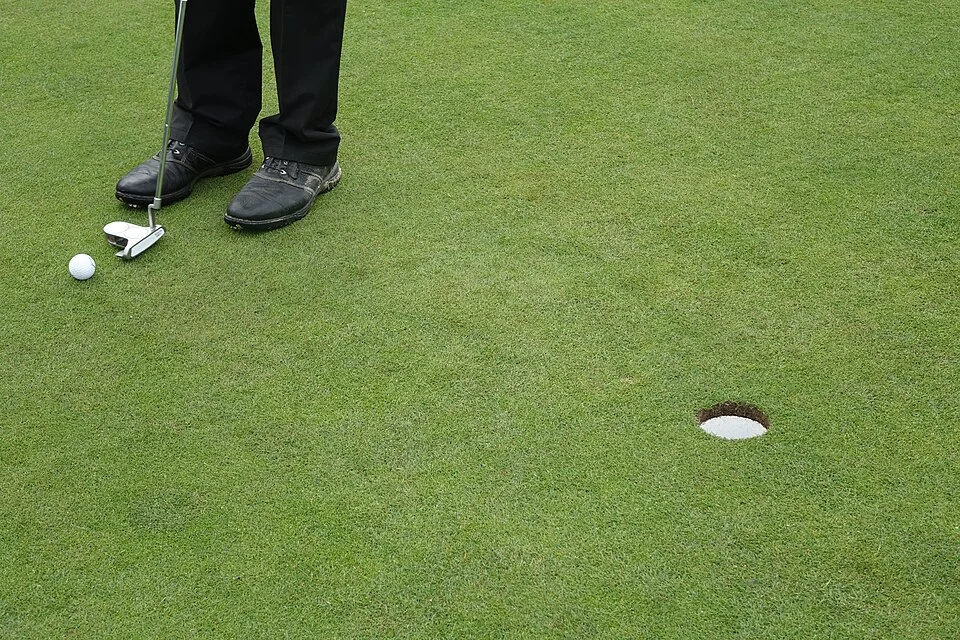
Record what you already own and what a venue actually supplies. A putter, balls, a bag or a practice aid may belong to a separate equipment budget rather than the recurring visit cost. The putting photograph illustrates a distinct practice setting, while the bag image shows that the complete inventory contains several items. Neither establishes a required kit or proves improvement. If you also track time, label travel, booked time and actual practice separately; an illustrative 45-minute booking is not automatically 45 minutes of comparable activity or a universally suitable training session.
Review the budget against what really happened
After the period, compare planned visits, completed visits and actual charges, preserving the original assumptions. A cost difference may reflect changed attendance, different inclusions or a new equipment purchase rather than better value. Keep any expected learning outcome out of the arithmetic unless a separate appropriate record supports a clearly stated observation. The completed budget should show the final AUD total, what it includes and which amounts remain unknown. That gives you a practical way to choose an affordable routine without inventing current prices, prescribing a training load or presenting spending as a guarantee of improved golf.
Open official model documentation ?