Count the complete set before adding another club
Make a full inventory before a purchase so an extra club does not disappear into an assumed set total.
Updated:
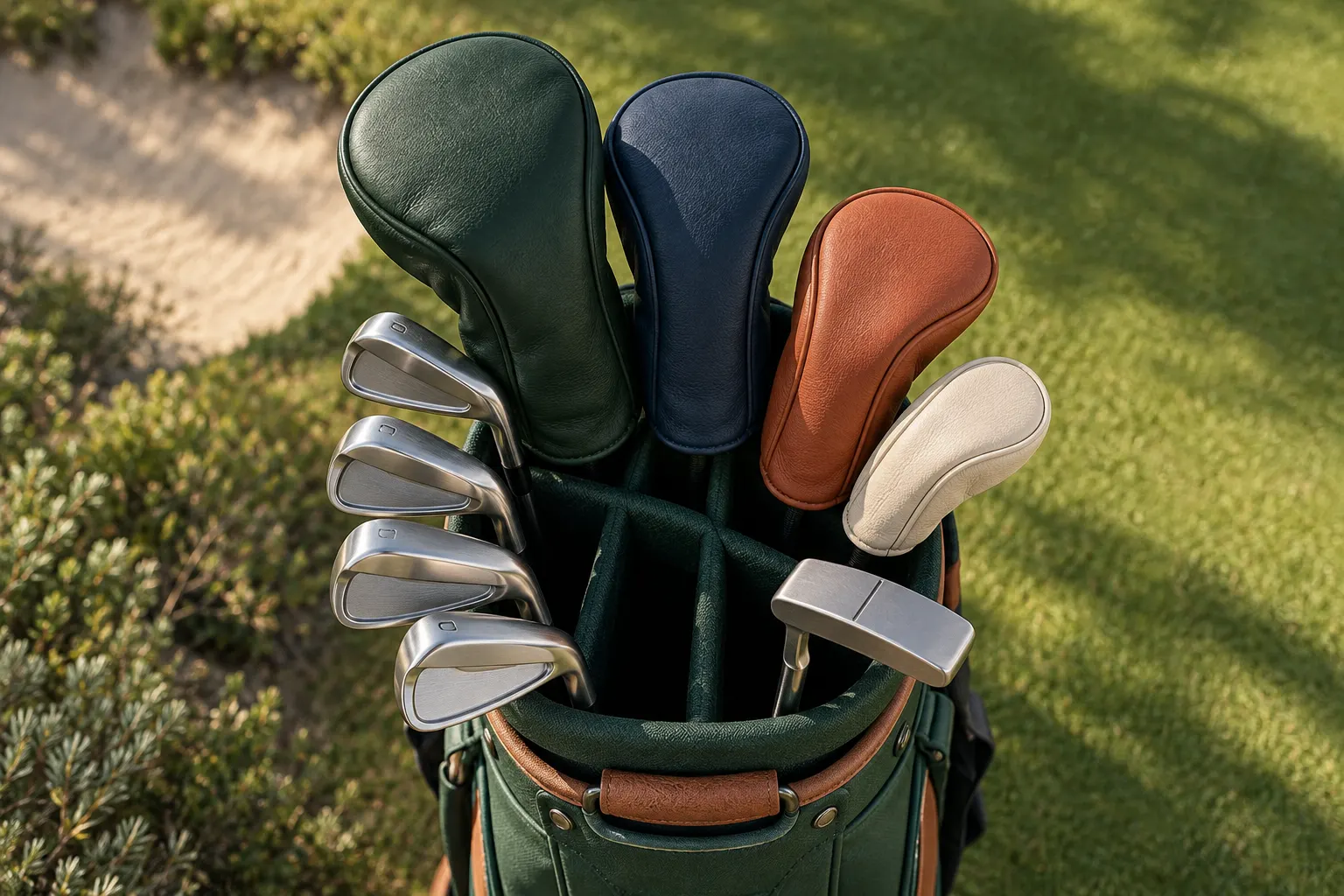
Count actual clubs rather than bag divisions
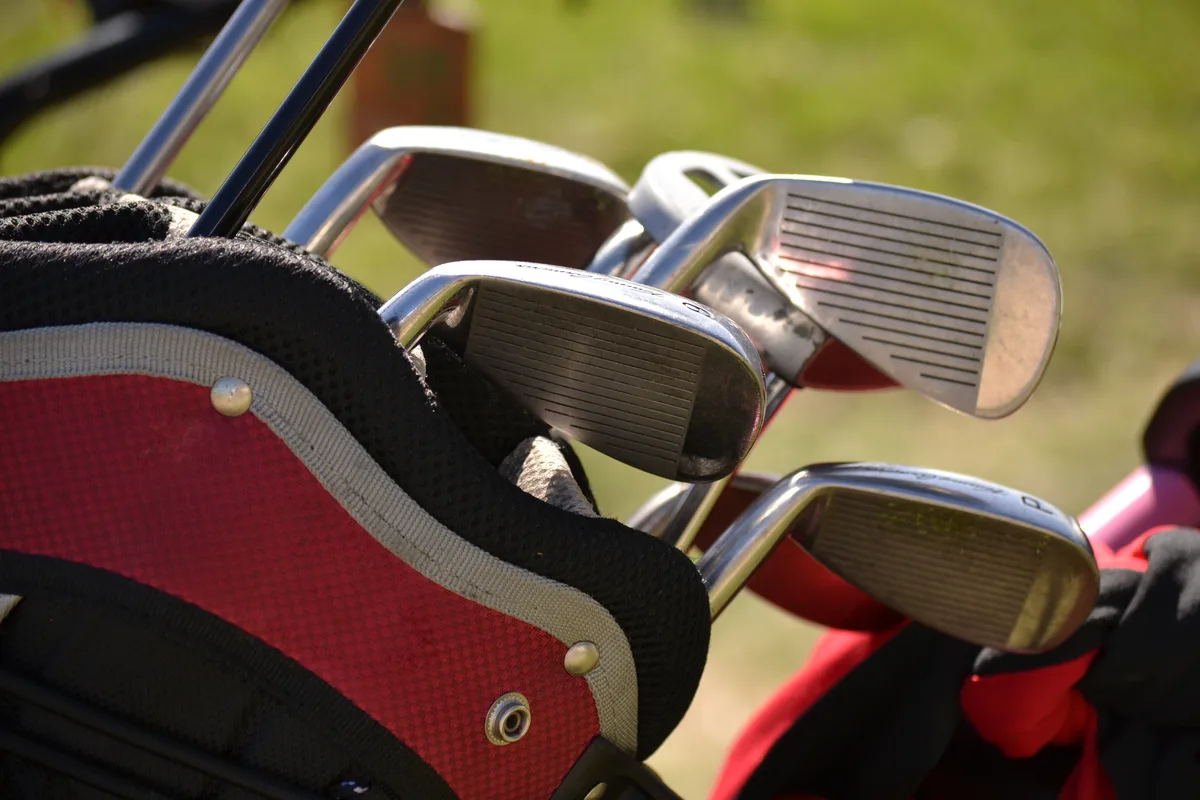
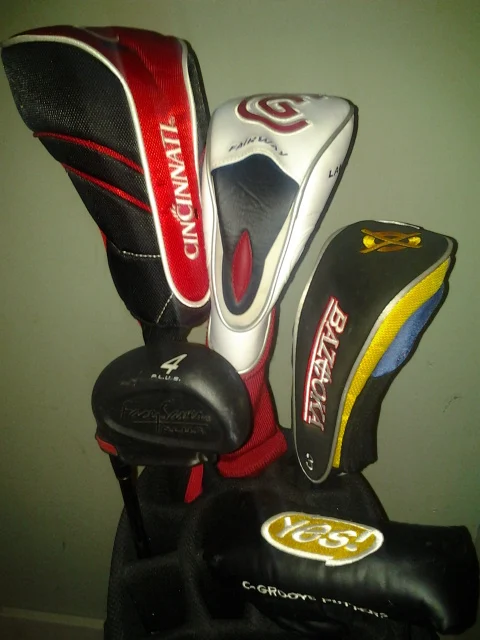
R&A Rule 4 limits a player's set to no more than 14 clubs. Make a complete inventory of the clubs you intend to carry rather than counting the bag's top divisions or assuming a boxed set's description is the final total. A putter, a trial club and a recently added wedge can be easy to overlook in a casual count. The bag photograph shows several separate pieces of equipment, while the headcover image shows why covered heads need identifying rather than treating each visible shape as a reliable record of the underlying club.
R&A Rule4equipment ? ACCC price displays ?
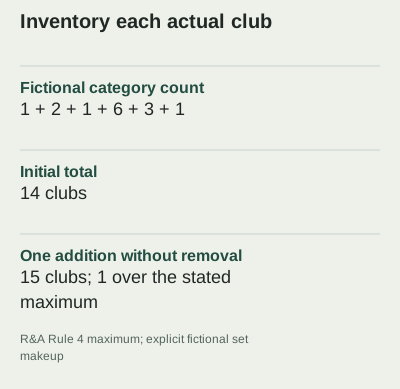
Write an explicitly fictional inventory
Suppose a fictional bag contains 1 driver, 2 fairway woods, 1 hybrid, 6 irons, 3 wedges and 1 putter. The count is 1 + 2 + 1 + 6 + 3 + 1 = 14 clubs. These categories are only a counting example, not a recommended set makeup or evidence that every listed club serves a useful role for one player. Name the actual models on your own list so a club included within a set is not counted twice. Preserve planned removals as well as additions when comparing an equipment order with what you already own.
Show what changes when you add a club
Adding one trial club to the fictional 14-club inventory produces 15, which exceeds the stated maximum by 1. If you intend to replace an existing club, name the one being removed and repeat the final count rather than treating replacement as an unrecorded assumption. The rules contain specific procedures and consequences for an excess-club situation; this purchase worksheet does not replace those provisions or give an individual ruling after play has started. Use the official rule and the competition's appropriate ruling route for that actual circumstance instead of assuming that a note in a shopping list cures it.
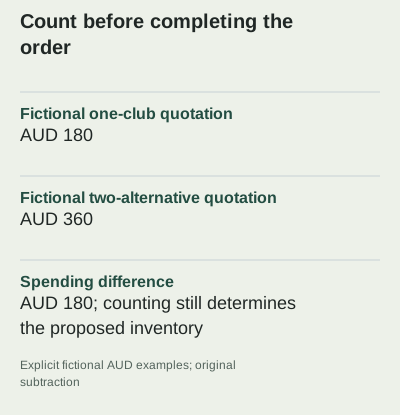
Keep the purchase consequence visible too
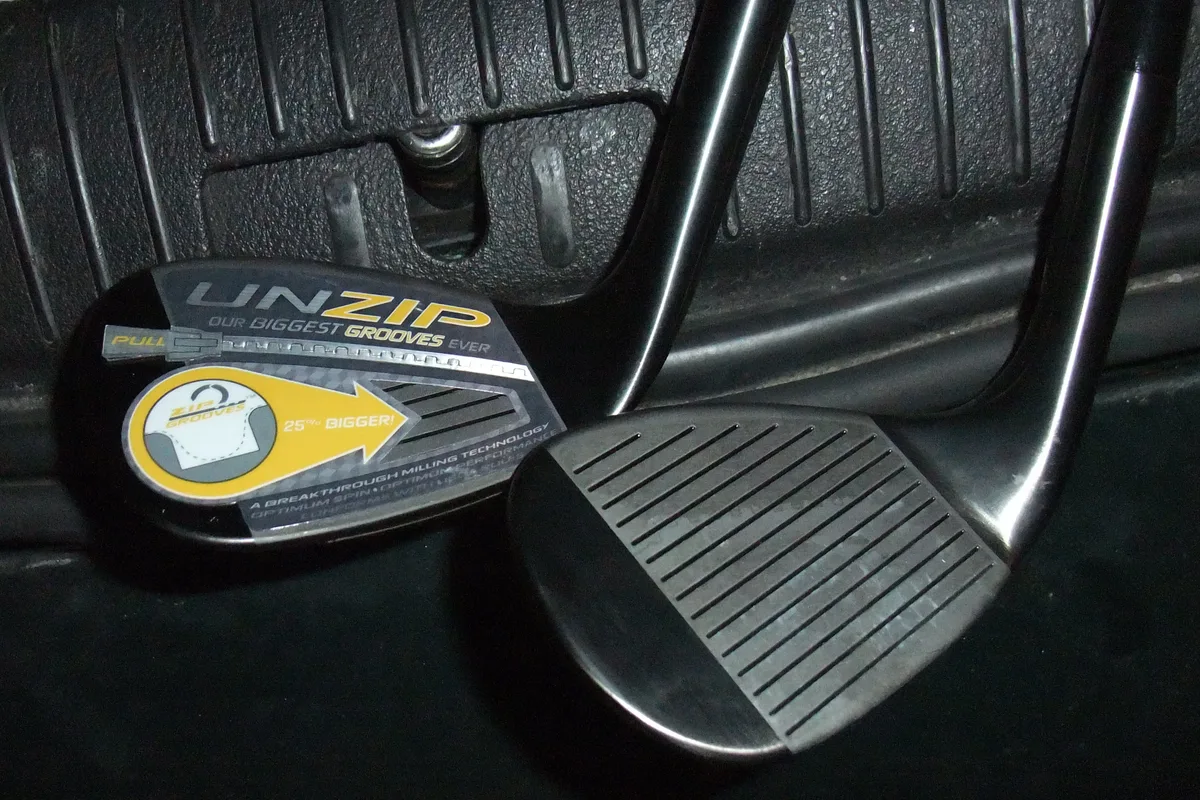
For a purely fictional shopping example, imagine one optional club quoted at AUD 180 and two alternatives together quoted at AUD 360. Buying both does not resolve the space question if the intended final inventory has room for only one additional club. The difference of AUD 180 is illustrative spending, not a current product price or a claim that either option suits your game. This is why the count belongs before the final order, alongside the fitting question and the proposed removals. The older wedge photograph identifies distinct heads; it cannot decide which existing club should leave your personal set.
Reconcile the written list with the packed bag
Before relying on the inventory, compare it with the actual contents you intend to take. Headcovers and bag compartments help organise equipment but do not certify the count or conformity of the clubs inside. Keep damaged, demonstration or spare equipment clearly distinguished in your preparation record and follow the actual rules for the round. The final worksheet should state the starting count, each addition and removal, and the resulting total. It provides a transparent arithmetic check without prescribing a club mix, promising a particular performance outcome or summarising every exception in the full equipment rules.
Open official model documentation ? Open official model documentation ?